
On 16th–17th October, at Adventure Dolphin in Pangbourne and Tolhurst Organic on the Hardwick Estate near Whitchurch-on-Thames, Living Thames is hosting our first Bioregional Convergence. Among the people joining us are Joe Brewer and Penny Heiple of the Design School for Regenerating Earth — arriving, quite literally, at the end of a bioregional pilgrimage that has taken them across North America, North Africa and Europe.
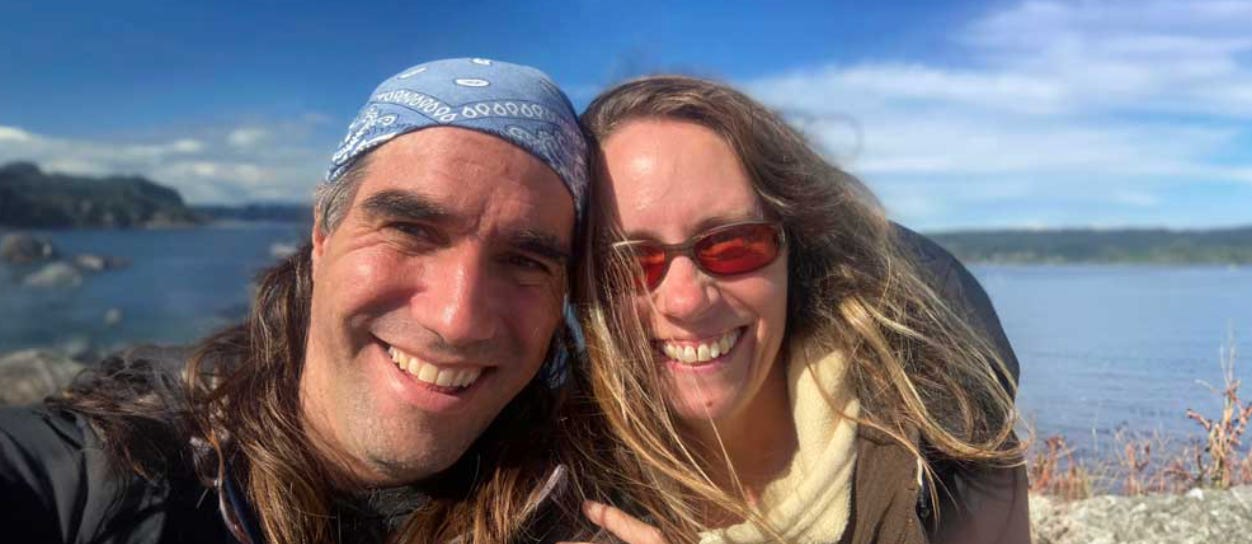
Joe is not new to this work. He grew up in the Ozarks of southwest Missouri, the son of back-to-the-land parents, and didn’t discover bioregionalism until he was forty — only to learn that the first bioregional congress had taken place twenty miles from where he was born. Since then he’s built a career at the intersection of systems science and grassroots organising: he trained in Earth systems and cultural evolution, was a fellow at the Rockridge Institute (the think tank George Lakoff founded to study political framing), and co-founded Culture2 Inc., a culture design lab. In 2019 he moved to Barichara, Colombia, and started the Barichara Regeneration Fund. From there he founded Earth Regenerators, a study group that drew thousands of participants over three years, and in 2023 co-founded the Design School for Regenerating Earth with Penny Heiple.
His argument, laid out in his book The Design Pathway for Regenerating Earth, is a simple but demanding one: the only way to regenerate the whole planet is to organise ourselves into bioregions — real, place-based economies and communities built around watersheds, soils and the living systems that actually sustain us, rather than the abstractions of nation-states and global markets. He doesn’t soften the diagnosis. As he puts it, human activity has pushed the Earth into overshoot and collapse. But he pairs that honesty with something rarer: a working model for what comes next, tested across dozens of bioregions on multiple continents.
What he and Penny will bring to the Thames bioregion, is what they call the Dandelion Vision — a plan for a thousand bioregional learning centres scattered across the Earth like seeds on the wind, each one rooted in its own landscape but connected to the others. Living Thames is one of those seeds. Having Joe and Penny here, at the point where their pilgrimage meets our river, is a chance to learn from and with people who have done this work, watched it fail, watched it take root, and kept going.
Come and hear Joe speak and meet with them both at the Convergence on 16th–17th October. Tickets here.